 By TTA Blog
In this ongoing series, Thrust Tech Accessories (TTA) highlights the many different aircraft types presently in service around the world. Join us as we explore the roles that venerable aircraft like the Saab 340 play in the industry, the niches they serve, and the important challenges they face day-by-day, year-after-year, all across the globe.
We also wish to underscore the key role that Maintenance, Repair and Overhaul service companies (MROs) like TTA play behind the scenes in providing overhaul, repair, and modification of engines and airframe accessory components that keep such aircraft flying properly, safely—and long into the future.
* * * * * * * * * * * *
Playing an Important Role
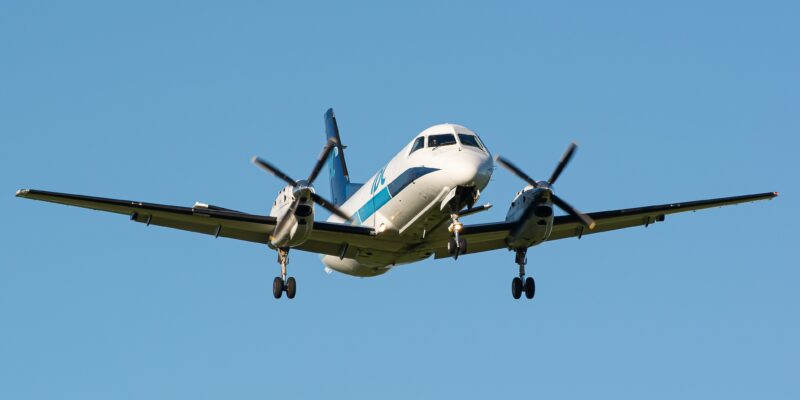
First taking to the skies in 1984, the twin-engine Saab 340 has proven itself a valuable short-haul workhorse. Powered by two General Electric CT7 engines, these 30 to 36 passenger turboprop aircraft (also known as the Saab SF340, other variant names and the Saab 2000) have played an important role in service for regional airlines, military, corporate, charter and private aircraft owners and operators.
In the mid-1970s, Swedish aircraft manufacturer Saab AB, known for its military aircraft production, decided to begin manufacturing civilian aircraft, explains Stanley Kowlessar, owner/ president, Thrust Tech Accessories (TTA), an experienced MRO services company based just outside of Fort Lauderdale Executive Airport. But it desired a partner and turned to Fairchild Aircraft, a U.S. manufacturer, to assist in production.
Swedish-American Partnership – Creating a Sweet Spot
On Saab’s end, it was responsible for 65 percent of production. For instance, it built the aircraft’s all-aluminum fuselage and vertical stabilizer, as well as supervising the final assembly of the aircraft in Linkoping, Sweden.
In turn, Fairchild’s responsibilities included approximately 35 percent of the production. For example, the American company built the wings, empennage (vertical and horizontal stabilizing surfaces), and the engines’ wing-mounted nacelles.
After successful development and coordination, Swiss regional airline Crossair took delivery of the first 340 aircraft, on June 6, 1984. Claim to fame? Just a week later, the aircraft performed its first paying passenger flight. One of the passengers was none other than Pope John Paul II!
Shortly following its launch onto the global market in the mid-1980s, the aircraft became the world’s best-selling commuter aircraft. Over the years, new variants emerged and in the early 1990s, the slightly-larger Saab 2000 was introduced.
In the early decades, the Saab 340 and Saab SF340 aircraft were tapped mostly for regional and commuter airline operations. But as newer regional aircraft types including those with jet-powered engine were introduced, the competition intensified.
The General Electric CT7-5A2 turboprop engine was considered quite competitive performance-wise in the early years. The aircraft’s range of 1,310 nautical miles worked well for short-haul regional airline service.
But over the next decade, the thinking of regional airline executives began to change as new jet-powered aircraft types such as the Bombardier CRJ200 and Embraer ERJ 145 family emerged
Tip-Top Condition
Cruising at a top speed of 312 to 326 miles per hour, the Saab 340 and all its variants have over the years been known for their cost-effective performance, flexibility, comfort and reliability. But as the aircraft continue to age, “our customers increasingly are turning to TTA to help keep these workhorses in the air and performing at an optimum level,” notes Kowlessar.
“For instance, our skilled technicians are experienced in working on starter generators, motors and other parts for the Saab 340 and its variants,” he adds. “Customers turn to us daily to help efficiently and safely maintain and reliably operate these aircraft.”
Shifting Dynamics
For Fairchild and Saab, the winds of change in regional aviation meant that the two companies ceased partnering on Saab SF340 production in 1987. At that point, all responsibility for components and manufacturing shifted to Saab in Sweden.
Variants continued to roll off the production line including 159 models of the new Saab 340A, and more than 200 second-generation Saab 340B variants with more powerful engines and wider horizontal stabilizers. A third generation, 340B Plus, also offered enhancements including an active-noise-and-vibration-control system for the aircraft cabin. Similarly, those were added to the larger Saab 2000.
But financial losses in a changing business marketplace ensued. In the late 1990s, American Eagle, a U.S. regional airline, which had originally placed an order for 50 340Bs along with options for an additional 50 aircraft, changed its mindset. In a more competitive marketplace with new options available, it opted to phase out its entire 340 fleet.
Production of the Saab 340 was shuttered by the manufacturer, with the last aircraft delivered on June 8, 1999. Ultimately, Saab ceased all civil aircraft production in 2005.
Still Providing Great Service
“Today, however, the Saab 340, Saab SF340, Saab 2000 or the many other variants of this aircraft type are still flying high, although they most often take to the skies in service for cargo, corporate, charter or private aircraft owners and operators,” says TTA’s Kowlessar.
“Many Saab 340s or variants have remained in service over the years and are still valuable assets for their owners or operators. We’re always here to discuss your needs and how to ensure your Saab 340 aircraft remain a vital part of your business,” he adds.
In addition, if any maintenance issue develops, TTA can help immediately. “Our team will communicate clearly throughout the MRO process, explain the options, keep an eye on affordability for clients – not just now but also for the future in terms of how best to proceed – and then arrange for needed repairs or parts replacements,” says Kowlessar. “Our goal is to help our customers get their Saab 340 aircraft back in the air.”
Ensuring Longevity and Reliability
To maintain the Saab 340s’ operational readiness and extend its service life, comprehensive MRO procedures are crucial to ensuring it continues to soar in the skies, meeting the demands of its diverse roles with excellence.
With a focus on servicing many of the smaller components of this airframe, Thrust Tech Accessories is proud of its unique role among the panoply of service providers worldwide that work in concert to keep this aircraft type in tip-top condition. On the Saab 340 aircraft, TTA provides specialized services on multiple components, including starter generators and motors among other parts
Routine & Intermediate Maintenance
To ensure aircraft remain airworthy and operational, routine and intermediate maintenance checks are always performed on a scheduled basis. It is during these checks that technicians will determine if any worn or damaged components must be replaced or repaired. This is where TTA steps into high gear. Operators around the world must often rely on certified MRO facilities like TTA to provide fast-turn maintenance services that aim to prevent system failures which could lead to unscheduled downtime or in-flight emergencies.
About Thrust Tech Accessories
Thrust Tech Accessories enjoys the opportunity to explore cost-effective measures to meet the specialized needs of the Saab 340 and other fascinating and storied airframes. The Fort Lauderdale-based MRO offers capabilities such as testing, repair service, overhaul service, and of course fast turn-around times. TTA supports a number of private and business aircraft operators as well as regional airlines, along with overseas air carriers and rotorcraft operators in numerous countries around the globe.
To find out more about TTA’s wide-ranging capabilities to support your fleet and to obtain competitive program bids, contact us via email at TTAsales@ThrustTech.com or call 954-984-0450.