
 By TTA Blog
Aircraft owners and operators often wonder whether “reactive maintenance” or “preventive maintenance” is the best approach for their aircraft. Beyond the regulatory compliance work that is obviously required, what’s the best option — both cost-wise and operationally — when it comes to other important MRO services?
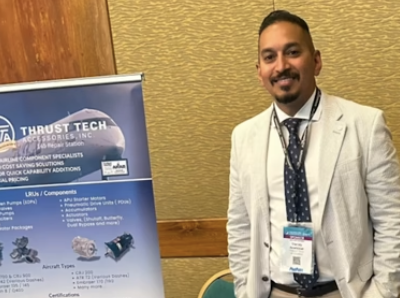
“Unfortunately, some aviation companies think that if an aircraft is operating flights and bringing in revenue, it shouldn’t be proactively grounded for routine, scheduled maintenance,” explained Stanley Kowlessar, Sr., president and general manager of Thrust Tech Accessories, an experienced maintenance, repair, and overhaul (MRO)) services company based near Fort Lauderdale Executive Airport.
“Leaders may envision preventive maintenance as money vanishing into thin air, but in reality, nothing is further from the truth,” Kowlessar stressed. “Reactive maintenance — turning into a ‘break-fix’ situation — is often the cause of both operational disruption and unplanned, higher MRO expenses.”
Understanding AOG Cost Hits
It’s advantageous for aviation owners and operators to evaluate how much money could go “down the drain” if an AOG (aircraft-on-the-ground) situation develops. “Over the course of a year of fleet operations, that type of situation might actually cost the aircraft operator much more,” Kowlessar added.
The time required to fix an AOG problem may take far longer than conducting routine, preventive maintenance on a set timeframe.
How so? The time required to fix an AOG problem may take far longer than what would have occurred had the aircraft entered routine, preventive maintenance on a set timeframe. Budgeting for reactive maintenance is also challenging, as MRO issues can be unpredictable.
In an unexpected AOG situation, the MRO team may need to wait for parts to be shipped in, and with ongoing international supply chain issues, parts availability may be delayed — meaning increased costs as a plane awaiting repairs is put out of service for an even longer period.
More AOG Issues
Maintenance workers and technicians may need to drop their other planned MRO tasks to handle an emergency repair, creating a disruptive ripple effect through the entire operation. The services of a specialized MRO technician or expert on an emergency basis — at a higher cost — may also be required to address certain issues.
If that occurs during a busy season, such as summer or the year-end holidays, the AOG clock can keep ticking day after day. Aircraft are precision machines, so companies that pass on routine maintenance may also need to contend with residual damage and a wider scope of needed repairs.
From an investment perspective, the regular upkeep of aircraft can extend the working life of these critical assets. “That, in turn, can defer big capital investments for new aircraft purchases,” Kowlessar noted.
Unexpected Loss of Revenue
It’s also important to consider the customer fallout. “Aircraft owners and operators must consider the unexpected revenue losses they may incur — whether from lost passenger ticket charges or charter revenue — due to an AOG situation,” said Kowlessar.
“And if a customer’s flight is cancelled, that person will often turn to a competitor for a replacement flight,” he said. “If that works well, they might even choose to use that alternative company for future flights. That can be another significant financial hit.”
Typically, annual aircraft maintenance costs are sizable — representing 10 to 15 percent of an airline’s total operating costs. “But consider that it could be three-to-five-times more expensive to react to MRO issues than to plan routine scheduled maintenance,” Kowlessar emphasized.
Predictive Maintenance Emerges
Kowlessar often counsels those in leadership roles — including directors of maintenance, chief financial officers, and aircraft owners — to view preventive maintenance as productive cost control. “But it’s also much more,” he emphasizes. “It’s proactive corporate budget stabilization.”
DOMs, CFOs, and aircraft owners should also view preventive maintenance as proactive corporate-budget stabilization.
While any planned preventive maintenance program is valuable, one significant development that has emerged over the past decade is “predictive maintenance.” It fine-tunes a company’s preventive maintenance timeline by tapping into advanced data analytics gathered from sensors, onboard systems, and historical failure patterns — further reducing MRO costs.
For instance, between 2010 and 2018, Delta TechOps’ APEX predictive maintenance program reduced the airline’s maintenance-related cancellations from 5,600 to just 55 annually, delivering substantial cost savings. Aviation Week Network recognized Delta with a 2024 Grand Laureate Award specifically for how APEX has reimagined the airline’s engine maintenance operations.
Prevention Better than Cure
“Overall, it’s clear that preventive maintenance of any scope can save aircraft owners and operators money versus relying on a reactive approach,” Kowlessar emphasized. “Simply put, when it comes to tracking financial output over time for MRO services, prevention is better than cure.”
Talk to TTA today about your company’s needs and getting on the right preventive maintenance schedule — with an eye toward affordability, high-quality MRO services, and efficiency of flight operations.
About TTA
Thrust Tech Accessories (TTA) is a veteran-owned, full-service MRO company specializing in the repair and overhaul of components for private, corporate, and commercial aircraft. Located at 6701B NW 12th Ave., Fort Lauderdale, FL 33309, TTA serves clients around the world with FAA, EASA, and CAA certifications. Learn more at ThrustTech.com or call 954-984-0450.