 By TTA Blog
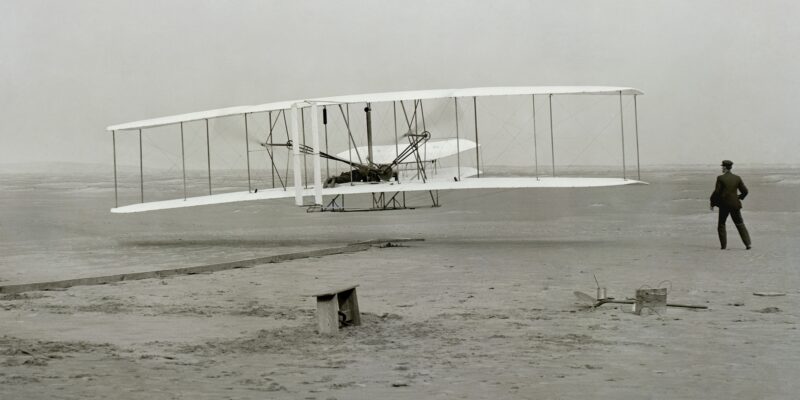
When the Wright Flyer took off in 1903, it was far more than 12 seconds of pure excitement. That first-ever, short sustained powered flight piloted by Orville Wright and subsequent flights piloted by his brother Wilbur later that day marked the beginning of powered aviation and transformed global transportation.
In 1939, U.S. President Franklin Delano Roosevelt officially designated August 19 as National Aviation Day, honoring both Orville Wright’s birthday and the Wright brothers’ pioneering first-flight achievement. But as that day approaches this month, let’s also celebrate the aviation industry’s incredible growth.
Today, at any given moment, 8,000 to 20,000 aircraft are in the air, a mix of private, commercial and military flights. It’s also mind-boggling to realize that just 123 years after that Wright Flyer’s first brief journey, today’s aviation industry supports nearly 88 million jobs globally across direct, indirect and tourism-related employment.
Certainly, maintenance, repair and overhaul (MRO) jobs are among those, and here are some of the highlights of the development of this sector of the aviation industry.
The Early Years and Roaring 20s
Forget the maintenance manual at the dawn of flight. Charles “Charlie” Taylor simply constructed the Wright Flyer’s engine from scratch. Back in the early years, aviation maintenance meant basic, pilot-provided repairs – such tasks as patching up wooden-and-fabric aircraft structures, lubricating airplane parts and working on simple engines.
While America partied on during the “Roaring 20s,” one important step toward better aircraft reliability and establishment of air safety standards was passage of the Air Commerce Act of 1926. In turn, as more aircraft took to the skies, the industry also began welcoming dedicated maintenance workers.
Aviation’s “Golden Era” and WWII
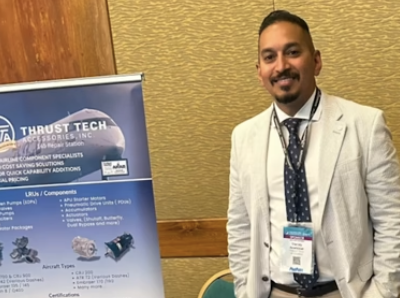
As the 1930s “Golden Era” of aviation began, one major development was the launch of the propeller-driven Douglas DC-3. “Manufactured by the Douglas Aircraft Company, this aircraft was more reliable, faster, had better range and provided greater passenger comfort than any previous aircraft,” says Stanley Kowlessar, Sr., president and general manager, Thrust Tech Accessories (TTA), a highly experienced MRO services company based near Fort Lauderdale Executive Airport in South Florida.
He continues: “In 1939, at the height of its fame, it’s estimated that DC-3s carried about 90 percent of all U.S. airline passengers.” In the 1940s, World War II then accelerated the development of organized maintenance operations, standardized MRO manuals and dedicated MRO depots.
In addition, the 1944 Convention on International Civil Aviation, better known as the “Chicago Convention,” launched new international aviation cooperation. Ultimately, that led to the debut of the International Civil Aviation Organization (ICAO), which established the framework for international civil aviation standards and cooperation. On the MRO side, that resulted in more formalized maintenance licensing and documentation requirements.
Post-War Expansion and Jet Engines
In the 1950s and 1960s, commercial and other aviation operations expanded rapidly across the globe. Most notably, the debut of more complex jet engines and the introduction of the Boeing 707 and DC-8 aircraft signaled the need for a totally new chapter in maintenance—with preventive maintenance becoming the MRO norm to enhance reliability and safety.
Boeing 747, Jet Complexity, 1970s and 1980s
Another giant leap in aviation technology and related MRO needs occurred with the debut of the widebody Boeing 747. Computerized maintenance management systems (CMMS) and Reliability-Centered Maintenance soon became standard in MRO operations.
A Digital Revolution
Starting in the 1990s and continuing into the 2000s, digital technology not only launched but thrived. It provided MRO technicians with aircraft diagnostics, performance monitoring and automated maintenance tracking.
“Analysis of digital data truly has helped cut both unexpected parts and systems failures and aircraft downtime,” emphasizes Kowlessar. “Suddenly, maintenance evolved from solving aircraft-on-the-ground (AOG) issues to preventive MRO and even predictive maintenance.”
Navigating the Modern Era
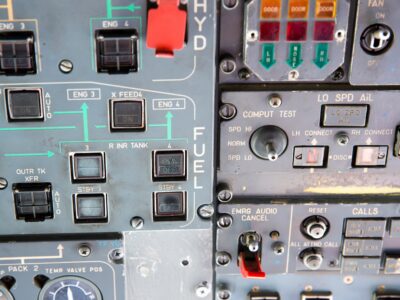
Today, MRO team members across the globe routinely deal with advanced avionics and high-technology systems, plus a well-honed process of safety directives and regulatory oversight. “But while new technology initiatives are increasingly important, human factors in aviation MRO remain paramount for the ultimate in safety and reliability,” stresses Kowlessar.
“At TTA, we strive to create good communications, a wide variety of training, clear direction, the right resources, opportunities for advancement, and much more to aid our MRO team members in doing the best job,” he says. “While the Wright Flyer started it all back in 1903, today’s aviation industry—and the critical need for MRO within that—shows just how far we’ve all come.”
About TTA
Thrust Tech Accessories (TTA) is a veteran-owned, full-service MRO company specializing in the repair and overhaul of components for private, corporate, and commercial aircraft. Located at 6701B NW 12th Ave., Fort Lauderdale, FL 33309, TTA serves clients around the world with FAA, EASA, and CAA certifications. Learn more at ThrustTech.com or call 954-984-0450.